How to End Bias in the Workplace: 3 Big Ideas



Test Takers

Combating unconscious bias has been a big focus in human resources in recent years. And while most companies would agree that creating a hiring process and a company culture that’s more diverse, equitable and inclusive is a priority, it can be difficult to know which steps to take enact meaningful change.
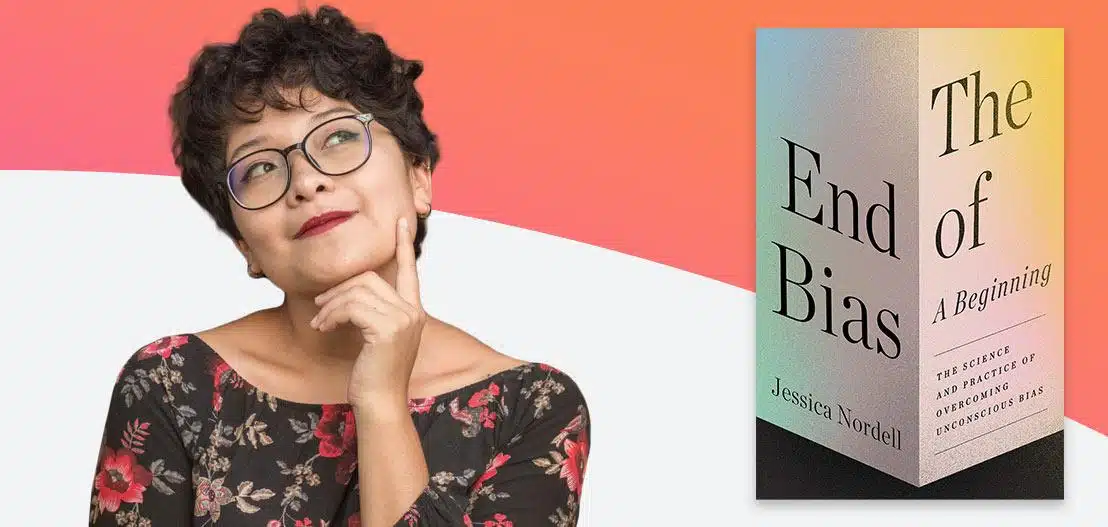
In her eye-opening book The End of Bias: A Beginning: The Science and Practice of Overcoming Unconscious Bias, science journalist Jessica Nordell offers a comprehensive look at how unconscious bias operates in both society and the workplace—and offers an unusually practical, data-backed playbook on how to bring about change on both the personal and global level.
Here are three ideas from the book that are especially relevant to human resource professionals committed to moving the DE&I needle forward.

In countless examples of police violence and disproportionate responses in high-tension situations, Nordell illustrates the many ways that fear of a perceived threat directly impacts our behavior. She also points out how it’s difficult, if not impossible, to notice (and adjust) your bad habits when you’re stressed—a phenomenon common in police officers experiencing burnout.
“Chronic stress,” writes Nordell, “creates a perfect storm for bias.”
So how do we manage fear and chronic stress and return to a state of emotional regulation? One answer is mindfulness. Multiple neuroscience studies confirm that mindfulness practices—especially compassion meditation—free up more mental resources to be conscious of the bias in our thoughts and actions and have a positive impact on how people feel about victims of unfair social interactions, police officers included.
Case in point: after multiple police departments implemented mindfulness training, officers reported an increase in feelings of wellbeing and quality of life—and rates of officers using force declined by 40% in one department.
Possible takeaways for HR:
Consider introducing a mindfulness practice to your company’s wellness program. Mindfulness training can be used proactively to help everyone in your organization learn how to be more present and come to situations with a mindset of non-judgment, which better equips them to make decisions based on objective data, rather than succumbing to the influence of unregulated emotions and unconscious bias.

If the opposite of bias is inclusion, we need a better understanding of what inclusion really means and how to work towards it. Many organizations have made substantial progress in the “D” and the “E” of DEI, but the “I” has been more elusive, particularly because it’s more challenging to measure. Nordell argues that creating more inclusive work environments relies not just on better representation, but on also shifting the apportioning of power.
A study of 30 years of equal employment data from more than 800 U.S. companies, along with hundreds of employee interviews, revealed several effective interventions.
Mentoring
Formal mentoring programs boosted leadership representation for women of color and Latinx and Asian American men. Some industries also saw more Black men and White women in management after implementing mentoring programs. Who does the mentoring matters, too. A university study found that, when female engineering students were paired with a male mentor or no mentor, they were more likely to switch majors in their first year. Among female engineering students who were matched with a woman mentor, 100% stayed in the program.
Transparency
Internal recruiting when positions and their criteria were communicated to everyone, rather than filled in secret, resulted in an increase in White and Latinx women in management. This is also true for paths to career development. When a path was clearly outlined, rather than unspoken, more Black men and Asian men and women advanced.
Accountability
“When a person or group oversaw these programs,” Nordell writes, “and managers knew they might be questioned about their decisions, diversity increased even more.” Some companies are even tying diversity to manager’s compensation in an effort to motivate even better results.
Possible takeaways for HR:
Seeing more diversity in your general population isn’t enough. Ask yourself and the other leaders in your company: who is helping make the big decisions? And, just as importantly, who is being left behind or left out when those decisions are being made?
Employee resource groups organized by marginalized people can be an effective way for employees to feel heard and represented—and executive leadership needs to not only listen to their concerns and suggestions, but to act on them as well. Also, if you have a mentoring program, be more considerate about the pairing of appropriate mentors; as the studies Nordell cited show, especially in contexts where there is a clear minority group, pairing members of those groups might have a positive long-term effect on retention.

Implementing objective, structured processes can do wonders in reducing bias.
Nordell shares data that illustrates how this concept of standardization plays out in the real world, all around us. In one instance, using a checklist in intensive care units reduced infection and led to lower surgery rates and fewer deaths. In a Florida school district, after noticing students in the gifted program were disproportionately white, despite being a small percentage of the general student population, the leader of the program instituted a blind screening process that included a cognitive test. The result: the number of Black and Latinx kids who qualified tripled.
Possible takeaways for HR:
Much scientific research, specifically research in industry-organizational psychology—has identified similar issues and solutions, in hiring. A few strategies for minimizing bias include:
To learn more, check out The End of Bias at your local library or grab your own copy from an independent bookseller or wherever you buy books. If your book club would like to take on this title, Nordell offers a free discussion guide for reading groups here.
Follow Nordell on Twitter and visit her website for more information about her work.