

Employee Turnover, Human Resources

Is your organization struggling with high employee turnover and low workplace retention? You're not alone. According to a survey by Gartner, 87% of HR leaders consider improving employee retention a critical or high priority over the next five years. Additionally, research indicates that enhancing retention is essential due to its significant impact on organizational stability and cost savings, as losing experienced workers reduces overall productivity and increases training needs, which in turn raises operational costs. This guide provides 10 actionable strategies to reduce employee turnover and enhance workplace retention. By implementing these strategies, you'll save on hiring and training costs and cultivate a more positive and productive work environment.
From offering competitive salaries and benefits to fostering career growth and development, we'll cover various methods to keep your employees engaged and committed. Additionally, we'll highlight the importance of creating a supportive and inclusive workplace culture that values open communication and recognition.
Don't let employee turnover disrupt your business – let's explore these strategies and improve your workplace retention!
What is Employee Turnover?
Employee turnover refers to the percentage of employees who leave an organization and are replaced by new hires. It is a crucial metric for understanding workforce stability and can be categorized into voluntary turnover (initiated by the employee) and involuntary turnover (initiated by the employer).
Understanding Employee Turnover
Employee turnover refers to the rate at which employees leave an organization, either voluntarily or involuntarily. Common reasons for employee turnover include:
- Lack of career growth and development opportunities
- Inadequate compensation and benefits
- Poor work-life balance
- Unsupportive or negative work environment
- Lack of recognition and appreciation
- Misalignment between employee values and the company's culture
How to Calculate Employee Turnover
Calculating employee turnover is straightforward. Here’s a simple formula:
Employee Turnover Rate = (Number of Departures in a Period / Average Number of Employees in the Same Period) × 100
Step-by-Step Calculation:
1. Determine the Time Period: Decide the period for which you want to calculate turnover (e.g., monthly, quarterly, annually).
2. Count the Number of Departures: Identify the number of employees who left during that period.
3. Calculate the Average Number of Employees: Add the number of employees at the beginning of the period to the number at the end and divide by two.
4. Apply the Formula: Use the formula above to find your turnover rate.
For example, if 10 employees left during a year and the average number of employees was 200, the turnover rate would be:
Turnover Rate = (10 / 200) × 100 = 5%
Additional Employee Turnover Formulas
- Monthly Turnover Rate = (Number of Departures in a Month/ Average Number of Employees in the Same Month) × 100
- Voluntary Turnover Rate = (Number of Voluntary Departures in a Period / Average Number of Employees in the Same Period) × 100
- Involuntary Turnover Rate = (Number of Involuntary Departures in a Period / Average Number of Employees in the Same Period) × 100
- Annual Turnover Rate = (Number of Departures in a Year/ Average Number of Employees in the Same Year) × 100
- Retention Rate = (Number of Employees at the End of the Period / Number of Employees at the Start of the Period) × 100
The Importance of Employee Retention
Monitoring employee turnover helps organizations identify patterns and trends that could affect their overall performance. High turnover can lead to increased recruitment and training costs, decreased morale, and loss of organizational knowledge. Understanding the causes of turnover allows companies to implement strategies to improve employee retention and reduce associated costs.
The Cost of Employee Turnover
The cost of employee turnover extends beyond just the loss of an employee. It includes recruitment, training, and lost productivity costs. High turnover can disrupt team dynamics and affect overall company morale.
Components of Turnover Costs:
1. Recruitment Costs: Advertising, interviewing, and hiring new employees.
2. Training Costs: Onboarding and training new hires to reach full productivity.
3. Productivity Loss: Decreased productivity during the transition period.
4. Intangible Costs: Impact on team morale and cohesion.
The overall cost of employee turnover can vary depending on the industry, the seniority of the position, and the level of specialization required. Studies have shown that the cost of replacing an employee can range from 50% to 200% of the employee's annual salary. By prioritizing employee retention, businesses can significantly reduce these costs and allocate resources more effectively toward other areas of growth and development.
Industry and Company Size Turnover Benchmarks
Understanding employee turnover benchmarks can provide valuable insights into how your organization compares to others in your industry and of similar size. By examining these benchmarks, you can identify areas for improvement and set realistic goals for reducing turnover. Here are some industry-specific and company size benchmarks to consider:
Industry Turnover Benchmarks
Employee turnover rates can vary significantly across different industries. Here are some average turnover rates by industry:
| Industry | Turnover Rate (%) |
| Retail | 60 |
| Hospitality | 74 |
| Healthcare | 20 |
| Education | 15 |
| Technology | 13 |
| Finance | 18 |
| Manufacturing | 25 |
Company Size Turnover Benchmarks
Turnover rates can also vary based on the size of the organization. Smaller companies often experience higher turnover rates compared to larger enterprises. Here are some average turnover rates by company size:
| Company Size | Turnover Rate (%) |
| 1-50 Employees | 35 |
| 51-200 Employees | 30 |
| 201-500 Employees | 25 |
| 501-1000 Employees | 30 |
| 1001-5000 Employees | 15 |
| 5001+ Employees | 10 |
By understanding these benchmarks, you can better assess your organization's turnover rates and implement targeted strategies to reduce them. Use our turnover calculator to get a clear picture of your current rates and take proactive steps to improve employee retention.
10 Strategies to Reduce Employee Turnover
Improving workplace retention requires a multi-faceted approach that addresses various factors contributing to employee satisfaction and engagement. Here are 10 strategies to reduce employee turnover and boost workplace retention:
- Enhance Employee Engagement: Foster a positive work environment where employees feel valued and engaged.
- Competitive Compensation and Benefits: Offer competitive salaries and benefits to attract and retain top talent.
- Career Development Opportunities: Provide opportunities for professional growth and development.
- Positive Work Culture: Cultivate a supportive and inclusive workplace culture.
- Effective Communication and Feedback Systems: Encourage open and transparent communication between managers and employees.
- Recognition and Rewards: Implement a comprehensive recognition program that includes both formal and informal methods of acknowledging employee performance.
- Work-Life Balance: Promote work-life balance through flexible work arrangements and supportive policies.
- Employee Well-Being Programs: Invest in health and wellness programs that support employees' physical and mental well-being.
- Clear Career Pathways: Create clear career paths and succession planning processes to help employees visualize their long-term growth within the organization.
- Regular Feedback and Performance Reviews: Implement tools and processes for regular feedback and performance reviews to recognize contributions and address concerns.
How Does Wonderlic Impact Employee Turnover
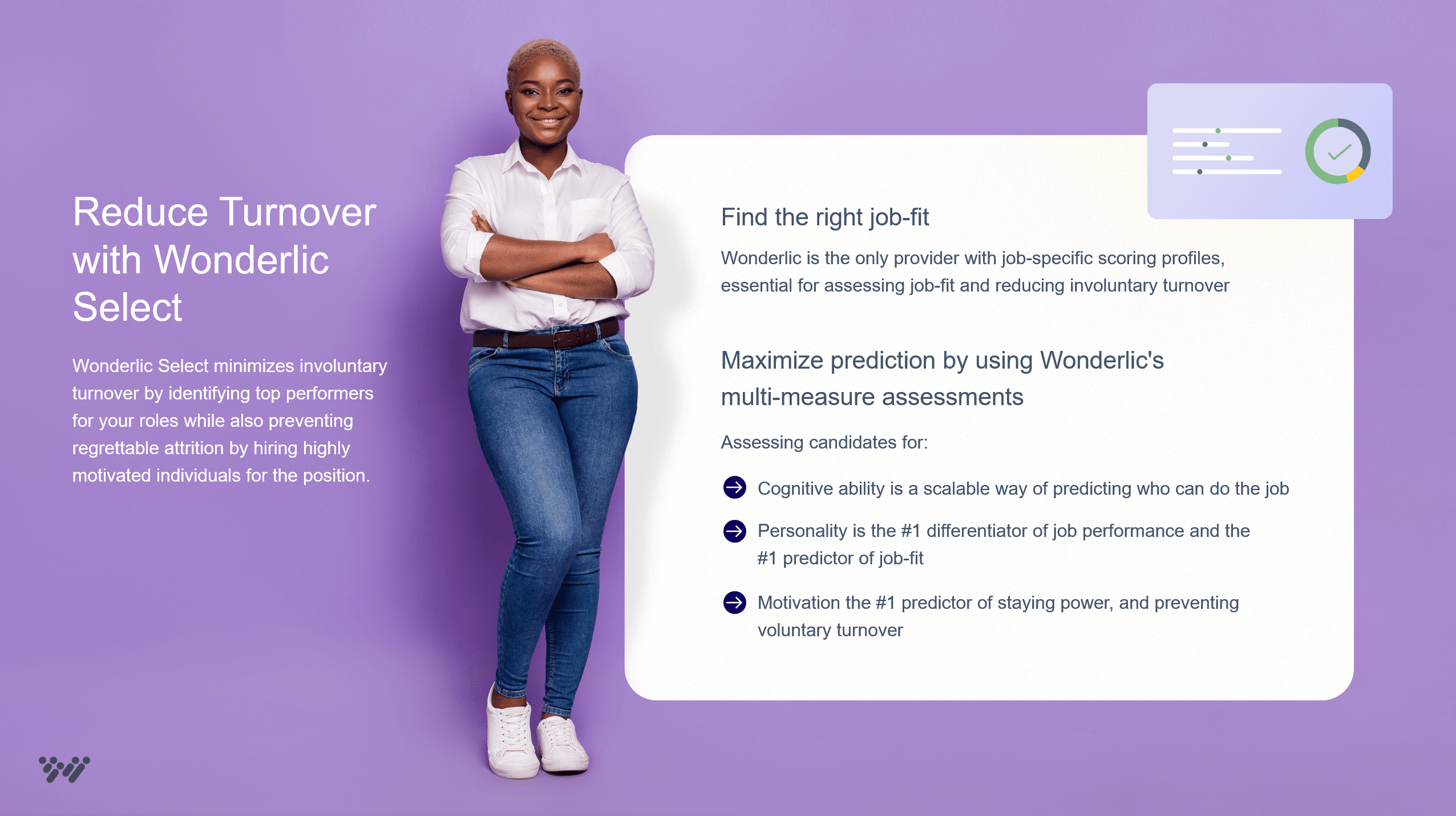
Wonderlic Select helps address turnover by ensuring you get the right people through the door. Better job fit leads to better retention and longer tenure.
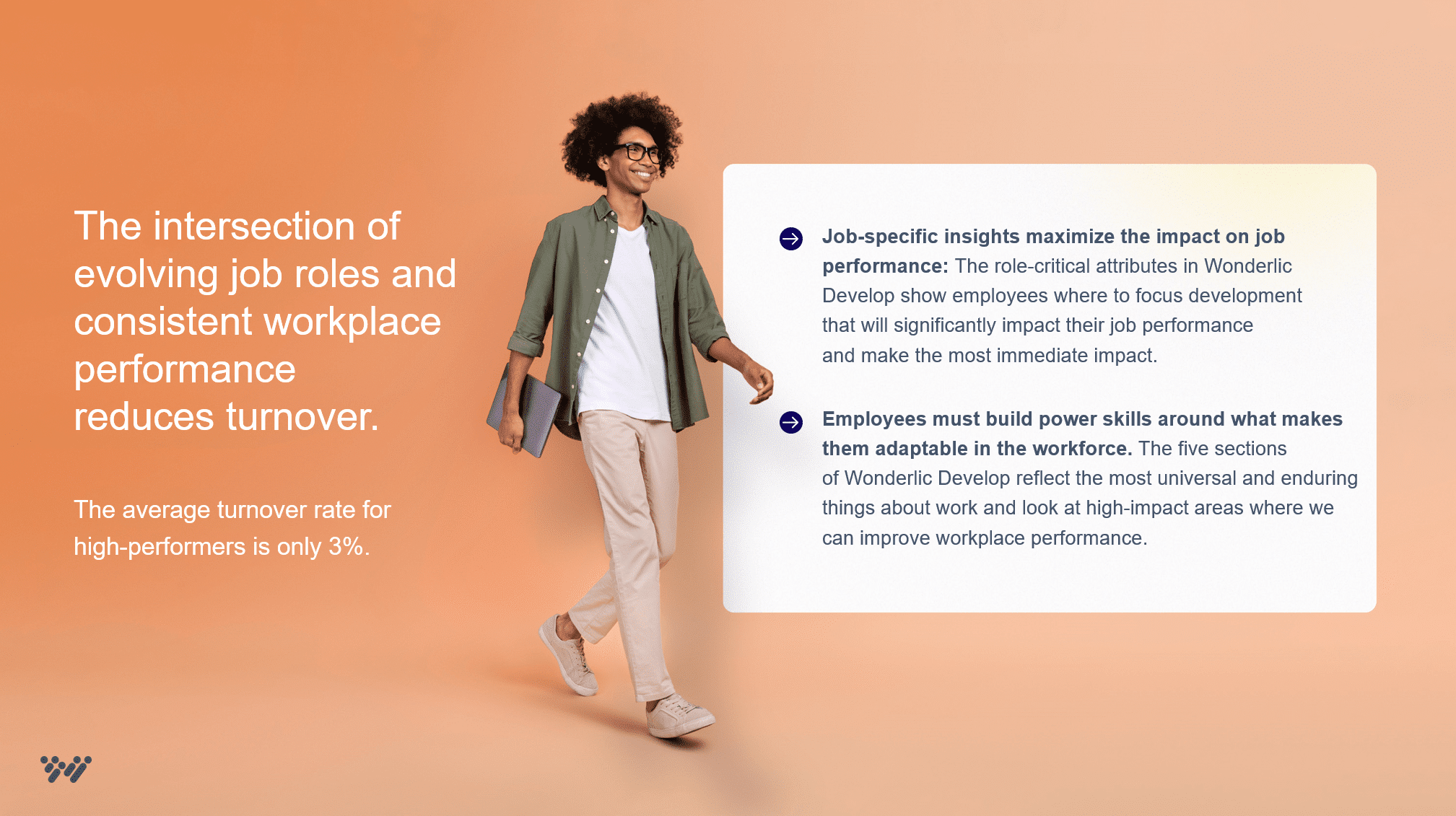
Wonderlic Develop keeps employees engaged by helping them develop in their roles and plot a path to their next role within your organization.
How You Can Take Action
Understanding and managing employee turnover is crucial for maintaining a stable and productive workforce. By regularly monitoring turnover rates and implementing effective retention strategies, organizations can significantly reduce costs and enhance employee satisfaction.
To take actionable steps:
- Monitor Turnover Rates: Use tools like our turnover calculator to understand your current turnover rates.
- Identify Problem Areas: Analyze the data to pinpoint specific departments or roles with high turnover.
- Implement Retention Strategies: Based on your findings, apply targeted strategies such as improving onboarding processes, offering professional development opportunities, and enhancing employee engagement.
- Reach out to Wonderlic: Utilize Wonderlic Select to hire the right fit and Wonderlic Develop to keep employees engaged and on a clear career path within your organization.
- Regularly Review and Adjust: Continuously assess the effectiveness of your strategies and make necessary adjustments to ensure ongoing improvement.
By following these steps, you can create a more engaged and loyal workforce, ultimately driving better business outcomes.
Related Articles


Employee Development
The Missing Piece in Performance Reviews is Coaching (and How to Incorporate It)

Employee Development
Employee Retention Strategies: 15 Proven Ways to Keep Top Talent and Reduce Turnover
Weekly Insights to Hire Smarter